
Who Is Liable in a Three-Car Accident?
Who Is Liable in a Three-Car Accident?
Three-car accidents raise complex questions about fault, shared responsibility, and insurance coverage, making liability harder to determine than in two-vehicle crashes.
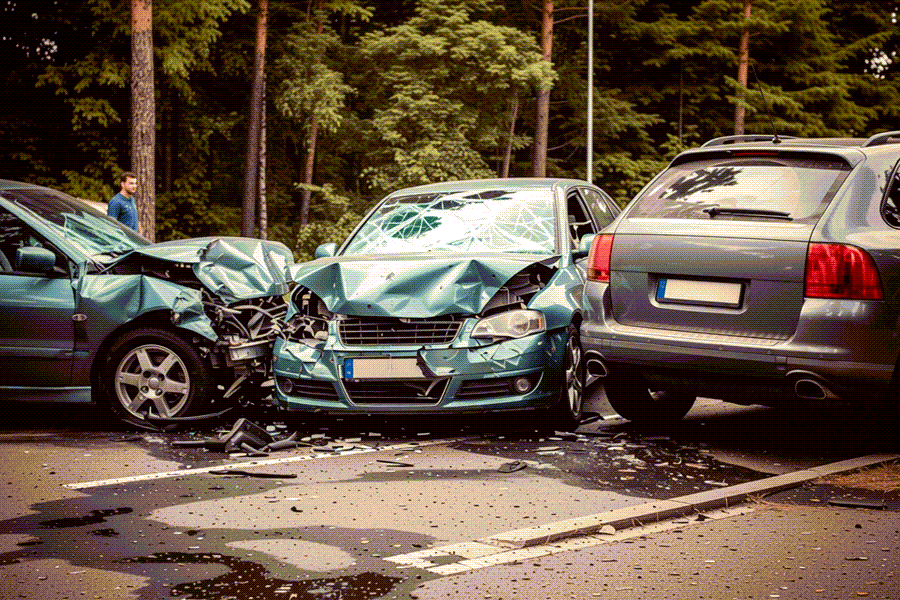
Quick Answer: Liability in a three-car accident is based on who caused the chain reaction and may be assigned to one driver or shared among multiple drivers under state fault laws.
Three-car accidents are more complicated than typical two-vehicle crashes because fault is rarely obvious. Chain-reaction collisions, multiple points of impact, and conflicting driver accounts often make it difficult to determine who caused the crash and who is financially responsible.
Understanding how liability works in a multi-vehicle accident can help protect your rights, avoid common insurance pitfalls, and prevent being unfairly blamed for damages you didn’t cause.
Three-car accident claims fall under car accident law, a subset of motor vehicle accident law, which governs crashes involving passenger vehicles, trucks, motorcycles, pedestrians, and other roadway users.
How Liability Is Determined in a Three-Car Accident
In most cases, liability is based on negligence, meaning whether one or more drivers failed to act reasonably under the circumstances. Investigators, insurance adjusters, and courts evaluate:
- How the accident started
- Whether traffic laws were violated
- How each vehicle contributed to the final collisions
Unlike two-car accidents, liability in a three-car crash or multiple-vehicle crash often involves more than one at-fault driver.
Common Three-Car Accident Scenarios and Fault
Rear-End Chain Reaction Collisions
These are among the most common three-car accidents. They often occur when:
- Driver A rear-ends Driver B
- The impact pushes Driver B into Driver C
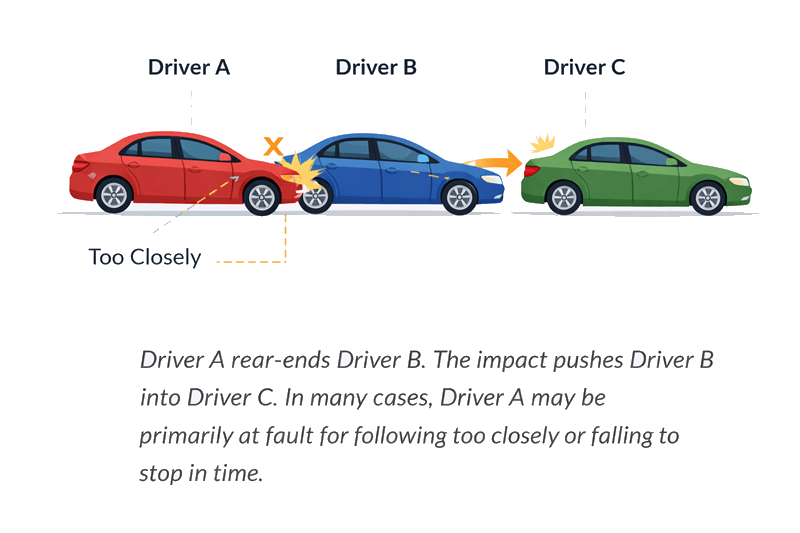
In many cases, Driver A may be primarily at fault for following too closely or failing to stop in time. However, fault can be shared if:
- Driver B was stopped illegally
- Driver C made a sudden unsafe stop
- Weather or road conditions played a role
Multi-Vehicle Intersection Accidents
Intersections increase complexity because multiple traffic signals, right-of-way rules, and driver decisions are involved.
Fault may depend on:
- Who had the right of way
- Whether a driver ran a red light or stop sign
- Whether one driver’s actions forced others into unavoidable collisions
In these cases, more than one driver may bear responsibility.
Lane-Change or Merging Accidents
Improper lane changes can trigger multi-vehicle crashes when:
- One driver cuts off another vehicle
- A sudden maneuver causes evasive braking
- Following drivers are unable to stop safely
Liability often hinges on whether the lane-changing driver failed to signal, misjudged spacing, or violated traffic laws.
Can More Than One Driver Be Liable?
Yes. In many three-car accidents, liability is shared.
Depending on state law, each driver may be assigned a percentage of fault. For example:
- One driver may be 60% responsible
- Another driver 30% responsible
- A third driver 10% responsible
This directly affects how much compensation each injured party can recover.
Comparative vs. Contributory Negligence in Multi-Vehicle Accidents
Fault rules vary by state and can have a major impact on whether an injured driver can recover compensation after a three-car or multi-vehicle accident. These rules are especially important when more than one driver may have contributed to the crash.
Comparative Negligence in a three-car accident
Most states follow some form of comparative negligence, which allows an injured driver to recover compensation even if they were partially at fault for the accident. However, the amount they recover is reduced by their percentage of responsibility.
For example, in a three-car rear-end collision:
- Driver A is following too closely and causes the initial impact.
- Driver B is pushed into Driver C.
- Investigators determine Driver B was also slightly at fault for braking suddenly without reason.
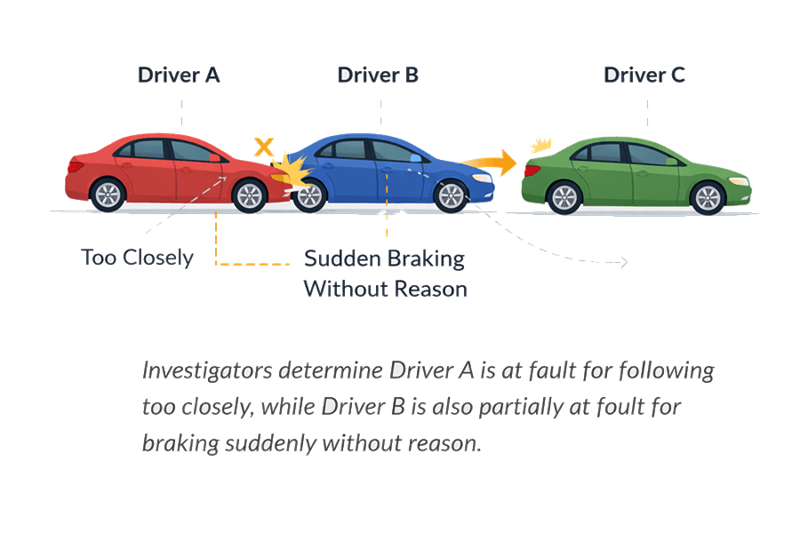
If Driver B is found 20% at fault and suffers $50,000 in damages, their compensation may be reduced by 20%, allowing them to recover $40,000 instead of the full amount.
In multi-vehicle accidents, comparative negligence often results in shared liability, with each driver assigned a percentage of fault based on their actions leading up to the crash.
Contributory Negligence in a three-car accident
A small number of states follow contributory negligence rules, which are far stricter. Under this system, an injured driver may be barred from recovering any compensation if they are found even slightly at fault for the accident.
In a three-car intersection accident, for example:
- Driver A runs a red light.
- Driver B enters the intersection on a green light but is speeding.
- Driver C is struck after the initial collision.
Even if Driver A caused the crash, Driver B’s speeding could be enough to prevent them from recovering any compensation in a contributory negligence state. This makes fault disputes far more consequential in multi-vehicle accidents.
Because of this harsh outcome, insurers in contributory negligence states often aggressively argue that injured drivers contributed to the accident in some way.
Why Fault Rules Matter More in Three-Car Accidents
In two-vehicle crashes, liability is often binary – one driver is at fault and the other is not. In three-car or multi-vehicle accidents, fault is frequently divided, and small details can significantly affect the outcome.
Understanding whether your state follows comparative or contributory negligence rules can determine:
- Whether you can recover compensation at all
- How much your recovery may be reduced
- How insurers approach settlement negotiations
This is why liability analysis is often more complex (and more heavily contested) in three-car accidents than in simpler collisions.
Evidence Used to Determine Liability
Because three-car accidents often involve conflicting accounts, evidence plays a major role, including:
- Police accident reports
- Vehicle damage patterns
- Photographs and video footage
- Witness statements
- Traffic camera or dashcam recordings
- Accident reconstruction analysis
Insurance companies rely heavily on this evidence when assigning fault.
Insurance Challenges in Three-Car Accidents
Three-car accidents frequently result in:
- Multiple insurance claims
- Policy limit disputes
- Delayed investigations
- Finger-pointing between insurers
Each insurance company may attempt to shift blame to reduce its payout, which can complicate and prolong claims.
What If an Uninsured or Underinsured Driver Is Involved?
If one driver lacks adequate insurance, injured parties may need to rely on:
- Uninsured/underinsured motorist coverage
- Personal injury protection (PIP), where available
These cases often involve additional legal and coverage issues.
What NOT to Do After a Three-Car Accident
In a three-car accident, liability is often disputed and shared, which makes early decisions and statements especially important.
- Don’t assume the rear driver is automatically at fault.
In multi-vehicle collisions, insurers often examine whether each driver contributed to the chain reaction, including sudden stops, unsafe lane changes, or following too closely.
- Don’t give a detailed version of events at the scene.
With multiple drivers involved, incomplete or inaccurate statements can conflict with later evidence and be used to shift partial blame onto you.
- Don’t rely on another driver’s insurance company to determine fault fairly.
In three-car accidents, insurers frequently point fingers at other drivers to reduce their own liability, which can delay or complicate claims.
- Don’t ignore minor symptoms or delay medical evaluation.
In multi-vehicle crashes, injuries are often attributed to the wrong impact if treatment is delayed, making it harder to connect injuries to the accident.
- Don’t assume liability will be resolved quickly.
Three-car accidents often involve extended investigations, multiple adjusters, and conflicting conclusions about fault.
Because responsibility may be divided among several parties, early missteps in a three-car accident can have a greater impact on fault determinations than in simpler crashes.
When to Involve a Lawyer
Not every three-car accident requires a lawyer, but legal help is often useful when:
- Fault is disputed or unclear
- You are being blamed for part of the accident
- Multiple insurance companies are involved
- Injuries are serious or long-term
- Settlement offers seem low or delayed
An attorney can help gather evidence, communicate with insurers, and protect you from being unfairly assigned fault. This is especially important in multi-vehicle crashes, where statements or early decisions can significantly affect the outcome.
Conclusion
A three-car accident can be confusing, stressful, and far more complex than a typical two-vehicle crash. With multiple drivers, insurance companies, and competing versions of events, determining fault and securing fair compensation often takes time and careful documentation.
Taking the right steps after the accident, avoiding common mistakes, and understanding how liability works can protect your rights and prevent problems later in the claims process. Because multi-vehicle accidents frequently involve disputed fault, it’s especially important to be cautious when dealing with insurance companies and making statements about what happened.
While every situation is different, knowing what to expect after a multiple vehicle accident puts you in a stronger position to make informed decisions and move forward with confidence.