

Do Emergency Surgeries Increase the Risk of Retained Objects?
Do Emergency Surgeries Increase the Risk of Retained Objects?
Patients are often told that emergency or high-risk surgery makes mistakes more likely. This article explains how courts treat retained objects in emergency surgeries—and why urgency does not excuse safety failures.
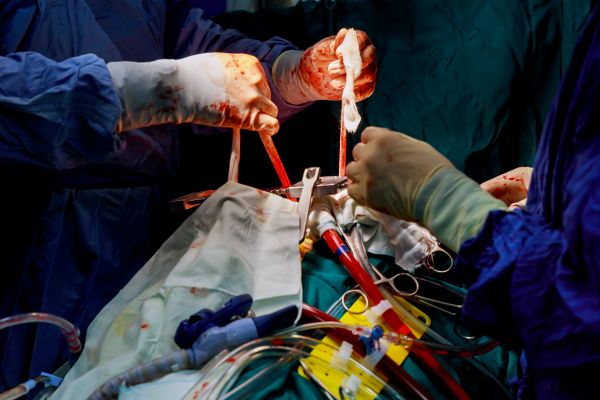
Quick Answer: Emergency conditions may increase complexity, but they do not eliminate the duty to track surgical items or prevent retained objects—and courts do not treat urgency as a free pass.
When a retained object is discovered after an emergency or high-risk surgery, patients are often given a version of the same explanation: everything happened very fast. The implication is clear—because the situation was urgent, mistakes were more likely and harder to prevent.
Patients may hear phrases like:
- “It was a life-or-death situation.”
- “There wasn’t time for the usual checks.”
- “The priority was saving your life.”
- “Emergencies are chaotic by nature.”
Each of these statements feels reasonable. In emergencies, people expect controlled processes to give way to rapid decision-making. When an object is later found, urgency becomes the explanation that seems to make sense of the outcome.
Why Urgency Feels Like a Justification
Most people intuitively believe that rules loosen during emergencies. In everyday life, urgency often excuses shortcuts. That instinct carries over to medicine, where patients assume safety steps must bend when time is limited.
Hospitals reinforce this belief, sometimes unintentionally, by emphasizing the severity of the situation rather than explaining how safety systems adapt under pressure. The message patients receive is subtle but powerful: this wasn’t ideal, but it was unavoidable.
The Emotional Weight of “Emergency”
Emergency surgery also carries emotional weight. Patients are grateful to be alive, reluctant to question care, and hesitant to challenge explanations that frame the outcome as the price of survival. When urgency is invoked, patients may feel that asking hard questions is inappropriate—or even ungrateful.
As a result, many patients stop pressing for answers once emergency conditions are cited, assuming that retained objects are a known risk of fast, complex surgery.
But, behind the explanation of urgency is a deeper concern: Does emergency surgery change the rules? If speed mattered more than precision, patients want to know whether safety failures were simply part of the tradeoff.
That question—whether urgency legally excuses retained objects—is what courts actually have to decide.
How Courts Evaluate Operating Standards in Emergency Surgeries
When emergency conditions are raised as an explanation, courts do not ask whether the surgery was stressful or fast. They ask whether safety obligations adapted appropriately to urgency—or were abandoned without justification.
Urgency Changes Context, Not the Duty
Courts recognize that emergency surgery is different from scheduled surgery. What they do not accept is the idea that urgency eliminates the obligation to track surgical items.
For example, if a trauma surgery proceeds rapidly to control bleeding, courts will still examine whether sponges and instruments were tracked in real time and reconciled before closure. Speed explains how the process looked—not whether it existed.
How Courts Judge “No Time for Counts”
When providers say there was “no time” for standard checks, courts look at what alternatives were used to manage risk.
So, if a team skips a formal count due to urgency but fails to use backup measures—such as visual sweeps, intraoperative imaging, or delayed closure until stabilization—courts may view the omission as unjustified rather than unavoidable.
The Moment Urgency Ends—and Accountability Begins
Emergency conditions are not static. Courts pay close attention to when the crisis phase ended and whether safety processes were reintroduced at that point.
That means if a patient is stabilized after an emergency procedure but the surgical site is closed without reconciling items used during the crisis phase, courts often treat that closure decision as a preventable failure—not an emergency necessity.
Why “Life-Saving” Does Not Mean “Error-Proof”
Providers sometimes frame retained objects as the unavoidable cost of saving a life. Courts reject that framing when safeguards exist specifically to prevent retained items—even in high-risk settings.
In cases where emergency teams regularly operate under pressure without retained objects, courts are reluctant to excuse failures as inherent to urgency rather than breakdowns in process.
What Are A Patient’s Actual Legal Rights?
Once urgency is offered as the explanation for a retained object, many patients assume there’s nothing left to examine.
Legally, that’s not true.
Retained surgical object cases exist precisely because the law recognizes that emergencies do not erase patient rights. What changes is not whether a claim can exist, but what gets examined and how.
You Have the Right to Question the Explanation
Patients are not required to accept “it was an emergency” as a complete answer. The law allows retained object cases to move forward even when surgery was urgent, high-risk, or life-saving.
That’s because patient rights are tied to preventable harm, not to whether the surgery was difficult.
In practical terms, urgency does not waive:
- the right to a safe closure,
- the right to reasonable safeguards,
- or the right to accountability when those safeguards fail.
What a Legal Team Actually Looks At in Emergency Cases
When a lawyer reviews a retained object case involving emergency surgery, the focus is rarely on criticizing split-second medical decisions. Instead, legal review tends to center on concrete, documentable issues, such as:
- operative timelines (what happened after stabilization),
- item tracking records (how materials were logged during the procedure),
- closure decisions (who authorized closing and when),
- post-crisis safeguards (what checks were reintroduced, if any).
These are not abstract legal theories — they are factual questions grounded in records that already exist.
How the Legal Process Treats Emergency-Based Defenses
In malpractice litigation, emergency explanations are treated as context, not as automatic defenses. Courts allow those explanations to be presented, but they also allow them to be tested against evidence.
That means:
- the explanation can be challenged,
- the timeline can be examined,
- and the question of preventability can still be decided.
Emergency status does not short-circuit the legal process.
What Patients Often Don’t Realize About These Claims
Many patients believe that if a surgery saved their life, bringing a claim is inappropriate or disrespectful. The law does not frame it that way.
A retained object claim does not ask whether the emergency decision was right. It asks whether avoidable harm occurred once the immediate danger was controlled.
Those are separate questions, and the legal system treats them separately.
Why This Matters Before You Decide Anything
Understanding that emergency explanations do not end your rights helps patients make sense of why:
- some cases proceed even after “life-saving” surgery,
- lawyers ask for detailed records rather than opinions,
- and early explanations from hospitals don’t always match later findings.
This isn’t about second-guessing medicine. It’s about whether the law provides a path to address harm that did not need to happen — even under pressure.
Why This Perspective Matters
Understanding that emergency conditions don’t erase safety obligations clarifies why retained-object cases can move forward even after life-saving care. It also explains why legal review concentrates on what happened after the crisis phase, not on second-guessing split-second decisions made to save a life.
This reframing helps patients reconcile gratitude with scrutiny without feeling like one negates the other.
Legal Background Resources
For more context on how the law treats retained surgical objects and surgical errors, the resources below explain the underlying legal framework in more detail.