

Faulty Design: Why Lithium-Ion Batteries Overheat or Ignite
Faulty Design: Why Lithium-Ion Batteries Overheat or Ignite
Lithium-ion batteries overheat or ignite due to design defects like internal short circuits, thermal runaway, poor heat dissipation, and inadequate safety controls.
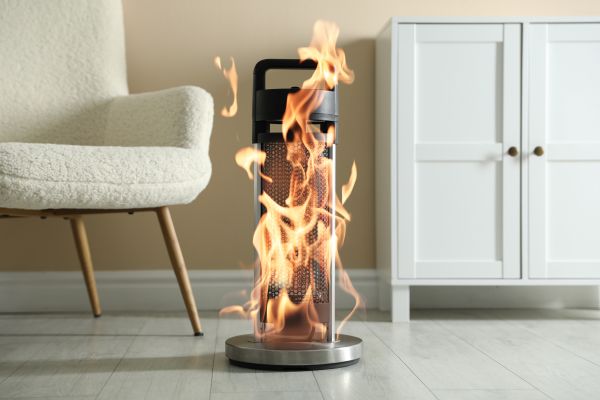
Quick Answer: Lithium-ion batteries overheat or ignite due to design defects that allow internal short circuits, thermal runaway, inadequate heat dissipation, or insufficient safeguards against overcharging and physical damage.
Lithium-ion batteries power everything from smartphones and laptops to electric vehicles and medical devices. While efficient and lightweight, they also pose serious safety risks when poorly designed. Fires, explosions, and thermal failures linked to lithium-ion batteries are frequently traced back to faulty design choices, not user misuse.
Understanding why these batteries fail is central to many product liability and consumer electronics design defect claims.
How Lithium-Ion Batteries Are Supposed to Work
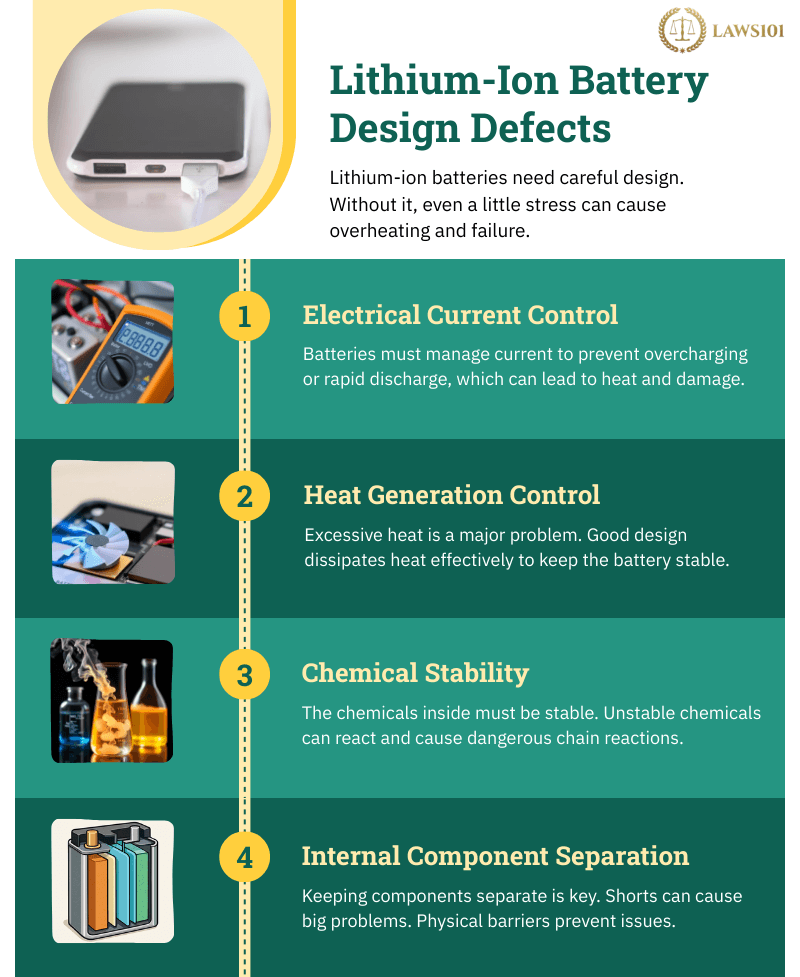
Lithium-ion batteries store energy by moving lithium ions between a positive and negative electrode through an electrolyte. A properly designed battery carefully controls:
- Electrical current
- Heat generation
- Chemical stability
- Internal separation of components
When design safeguards fail, even minor stress can trigger catastrophic overheating.
The Core Design Defect: Thermal Runaway
Most lithium-ion battery fires result from thermal runaway, a chain reaction where rising temperature causes further heat generation until ignition occurs.
Design flaws that enable thermal runaway include:
- Inadequate internal insulation
- Poor cell spacing
- Insufficient venting mechanisms
- Failure to isolate damaged cells
Once thermal runaway begins, it is extremely difficult to stop.
Common Design Failures That Lead to Overheating or Fire
Internal Short Circuits
Thin separators inside the battery can tear, melt, or degrade, allowing the positive and negative electrodes to touch. Even microscopic defects can cause rapid overheating.
Inadequate Heat Dissipation
Some batteries are designed without proper heat sinks, spacing, or airflow. When heat cannot escape, temperatures rise quickly—especially during charging or high-output use.
Overly Dense Cell Packing
Packing battery cells too tightly increases energy density but reduces thermal tolerance. A single failing cell can trigger adjacent cells, causing cascading failure.
Weak Battery Management Systems (BMS)
The BMS is supposed to regulate voltage, temperature, and charging. Poorly designed systems may:
- Fail to shut down during overheating
- Allow overcharging
- Miss early warning signs of failure
Lack of Physical Impact Protection
Many batteries ignite after drops, punctures, or compression. Design defects arise when manufacturers fail to include adequate shielding or structural reinforcement.
Why These Are Design Defects and Not User Error
Manufacturers often argue that overheating results from misuse, but courts frequently examine whether:
- The battery could safely tolerate foreseeable use
- Minor damage should have caused catastrophic failure
- Safer alternative designs existed at the time of manufacture
A product can be legally defective even if it works “most of the time.”
The Role of Safer Alternative Designs
In many battery defect claims, plaintiffs point to safer alternatives such as:
- Improved separators
- Fire-resistant electrolytes
- Better thermal barriers
- More robust battery management software
When manufacturers prioritize cost, size, or energy density over safety, liability risk increases significantly.
Where Lithium-Ion Battery Defects Commonly Appear
Defective battery claims often involve:
- Consumer electronics
- E-bikes and scooters
- Power tools
- Electric vehicles
- Medical and mobility devices
Injury risks include burns, fires, smoke inhalation, property damage, and wrongful death.
Why Litigation Often Follows Battery Fires
Because battery failures are rarely isolated incidents, they frequently lead to:
- Product liability lawsuits
- Class actions
- Mass tort litigation
- Insurance subrogation claims
Internal testing data, recall history, and design tradeoffs are often central to determining liability.
Final Takeaway
Lithium-ion batteries do not ignite spontaneously. Most fires stem from preventable design flaws that allow heat, electrical instability, or chemical reactions to spiral out of control.
When safer alternative designs exist but are not implemented, manufacturers may be held legally responsible for resulting injuries and losses.